A cancer diagnosis can bring many changes, and chemotherapy is often one of the biggest challenges patients face. Along with destroying cancer cells, chemotherapy can also affect healthy cells, leading to side effects such as nausea, fatigue, loss of appetite, changes in taste, and digestive discomfort.
During this time, eating may not always feel easy. However, choosing the right foods can help nourish your body, maintain your strength, and support recovery throughout treatment. While food cannot cure cancer, a balanced and nutritious diet can make a meaningful difference in how you feel during your chemotherapy journey.
Why Eating Well During Chemotherapy Matters
Think of your body as working extra hard during treatment. It needs energy to heal, repair healthy tissues, and stay as strong as possible. Even if your appetite is reduced, eating small portions of nutritious food throughout the day can help maintain your energy levels and support your overall well-being.
There isn’t a single diet that works for everyone. Every person’s experience with chemotherapy is different. The best approach is to choose foods that are nourishing, easy to digest, and comfortable for your body.
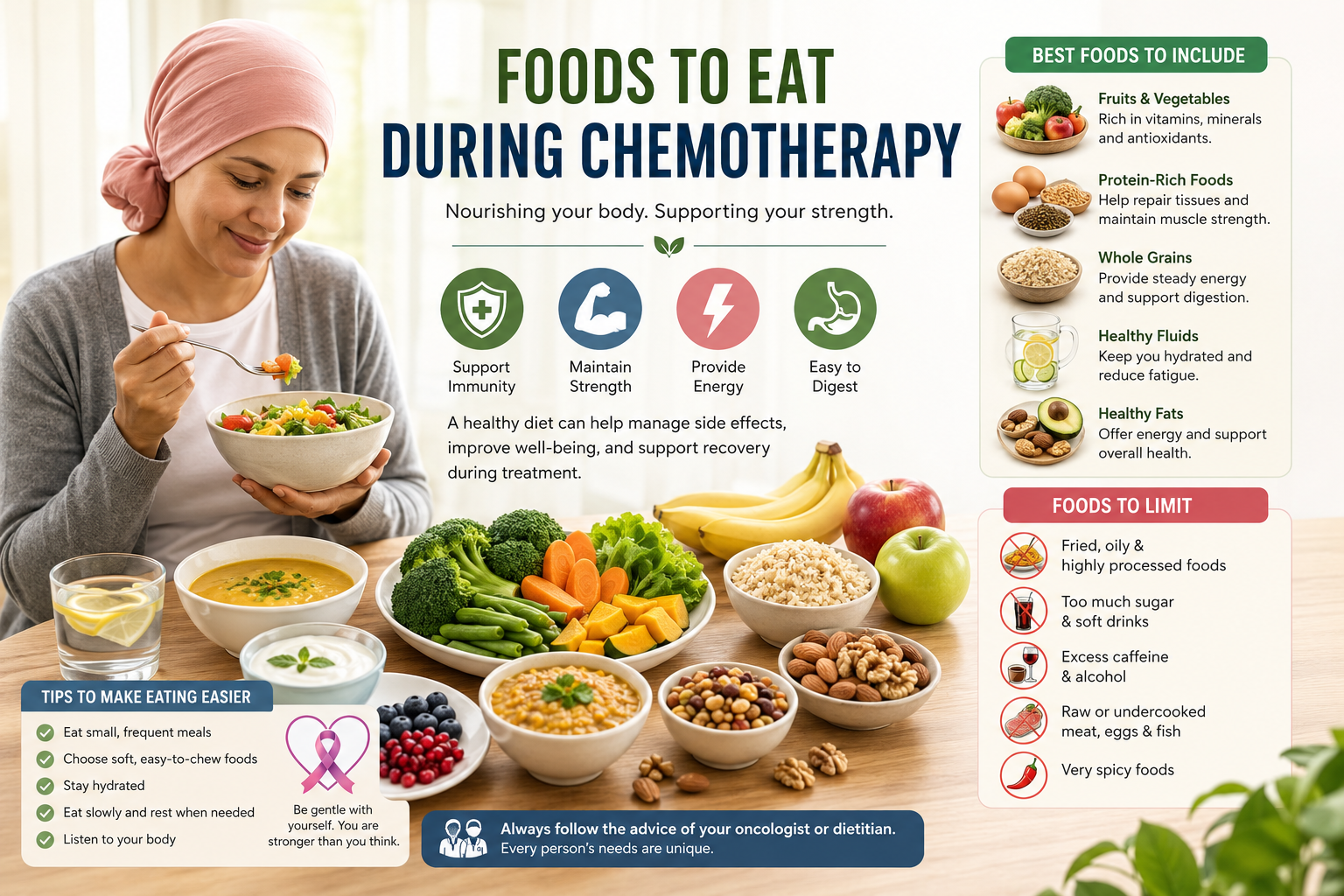
Best Foods to Include During Chemotherapy
Fresh Fruits and Vegetables
Colorful fruits and vegetables are rich in vitamins, minerals, antioxidants, and fiber that support overall health. If raw foods are difficult to tolerate, try steamed or lightly cooked vegetables instead.
Some easy-to-digest options include bananas, papaya, apples, berries, carrots, spinach, pumpkin, and sweet potatoes.
Protein-Rich Foods
Protein plays an important role in repairing body tissues and maintaining muscle strength during treatment. Including a source of protein in every meal can help your body recover more effectively.
Good choices include:
- Lentils and dals
- Chickpeas and beans
- Paneer
- Tofu
- Eggs
- Fish
- Lean chicken
- Curd or yogurt (if recommended by your doctor)
Whole Grains
Whole grains provide steady energy and support healthy digestion.
Healthy options include oats, brown rice, whole wheat, millets, quinoa, and whole-grain bread.
Stay Hydrated
Many chemotherapy side effects can increase the risk of dehydration. Drinking enough fluids helps your body function properly and may also reduce fatigue.
Choose water, coconut water, clear vegetable soups, buttermilk, lemon water, or freshly prepared fruit juices if recommended by your healthcare provider.
Healthy Fats
Healthy fats provide additional energy, especially when eating becomes difficult.
You can include small portions of:
- Almonds
- Walnuts
- Flaxseeds
- Chia seeds
- Olive oil
- Avocados
Foods That May Be Better to Limit
Some foods may worsen nausea, stomach discomfort, or increase the risk of infection during chemotherapy.
It may be helpful to limit:
- Fried and oily foods
- Highly processed snacks
- Sugary soft drinks
- Very spicy foods
- Alcohol
- Excess caffeine
- Raw or undercooked meat, fish, and eggs
- Unpasteurized dairy products
Always follow the dietary advice provided by your oncologist or dietitian, as your nutritional needs may vary throughout treatment.
Simple Tips to Make Eating Easier
If eating feels difficult, remember that small changes can make a big difference.
- Eat 5–6 small meals instead of three large meals.
- Choose soft foods if your mouth feels sore.
- Eat slowly and chew your food thoroughly.
- Keep healthy snacks within easy reach.
- Drink fluids between meals rather than during meals if you feel full quickly.
- Don’t force yourself to eat large portions. Even small meals provide valuable nourishment.
- Listen to your body’s hunger signals and eat whenever you feel comfortable.
A Gentle Perspective Through Ayurveda
Ayurveda emphasizes the importance of maintaining healthy digestion and overall balance within the body. During chemotherapy, freshly prepared, light, and easily digestible foods are traditionally encouraged to support general well-being.
Certain Ayurvedic herbs have also been traditionally used to promote vitality and overall health. However, herbal supplements should only be taken under the guidance of a qualified Ayurvedic physician and after discussing them with your oncologist, as some herbs may interact with cancer treatments.
Ayurveda can be used as a supportive approach alongside conventional medical care, but it should never replace chemotherapy or any other prescribed cancer treatment.
Every Journey Is Different
Some days you may have a healthy appetite, while on other days even a few bites may feel difficult. This is completely normal. Be patient and kind to yourself throughout the treatment process.
If you experience persistent vomiting, severe weight loss, dehydration, difficulty swallowing, or are unable to eat for several days, consult your healthcare provider promptly. They can recommend dietary adjustments or additional nutritional support to help you stay healthy throughout your treatment.
Conclusion
Chemotherapy is a journey that challenges both the body and the mind, but proper nutrition can help you face it with greater strength. Filling your plate with fruits, vegetables, whole grains, protein-rich foods, healthy fats, and plenty of fluids can help support your body’s nutritional needs during treatment.
Remember, every patient is unique. Work closely with your oncologist and a qualified nutrition professional to develop a meal plan that meets your individual needs. Along with medical care, healthy eating, adequate rest, and emotional support can all play an important role in improving your quality of life during chemotherapy.
Every healthy meal is a small step toward supporting your body. Take one day, one meal, and one step at a time.