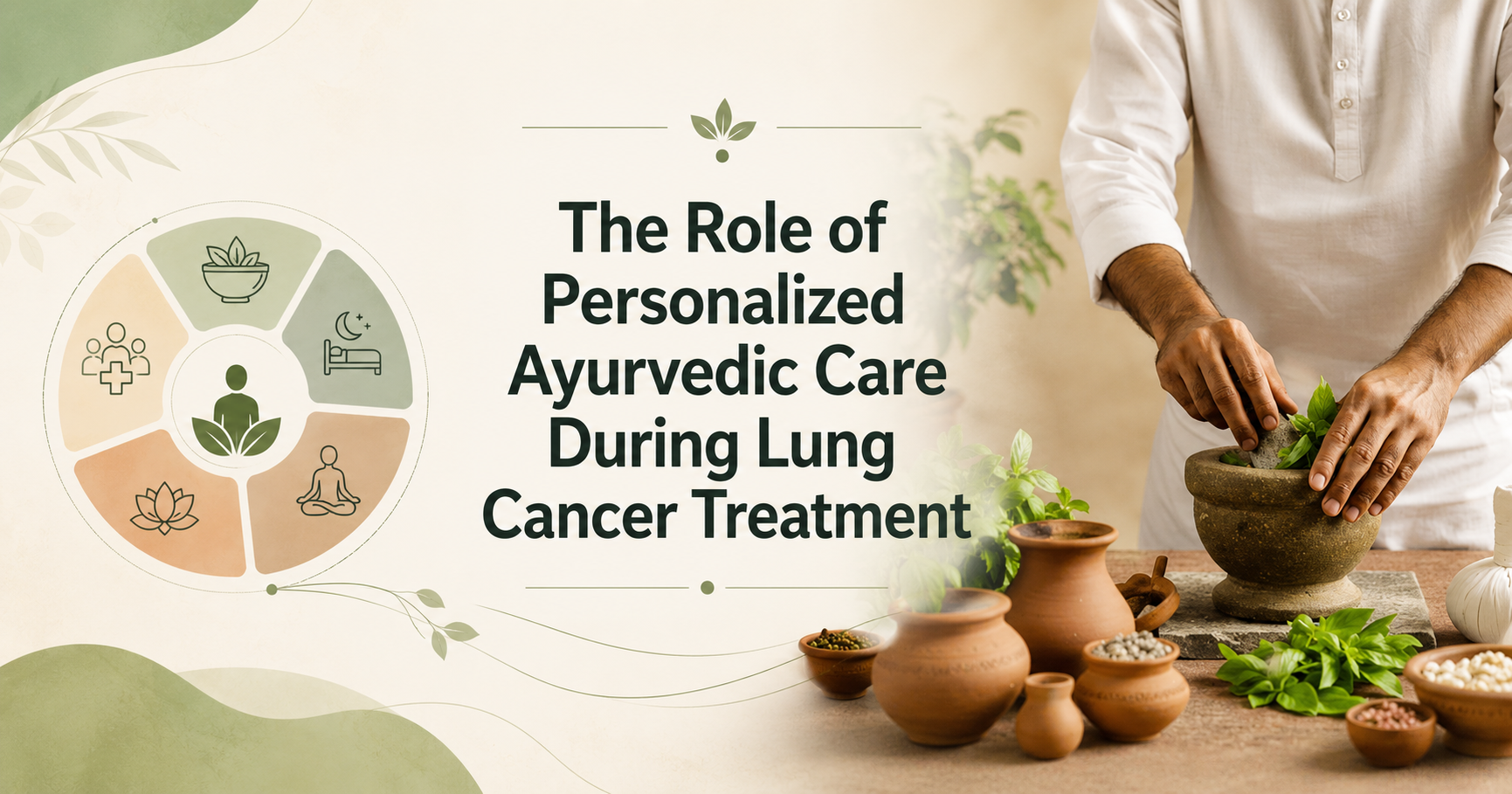
Lung cancer treatment can affect people in very different ways. Age, general health, treatment type, nutritional status, daily routine, and personal needs can all influence how someone feels during treatment. Because of these differences, supportive care should not follow a one-size-fits-all approach.
Ayurveda takes an individualized approach to wellness. When used responsibly alongside conventional cancer care, personalized Ayurvedic guidance may focus on supporting comfort, daily routine, nutrition, rest, and overall well-being. It should always be planned with qualified professionals and should never replace recommended cancer treatment.
Why Personalized Care Matters
Two people receiving treatment for the same type of lung cancer may have completely different experiences. One person may struggle with poor appetite, while another may have difficulty maintaining energy or following a regular routine.
Personalized supportive care considers these individual differences instead of recommending the same approach to everyone. An Ayurvedic practitioner may review a person’s current health, food habits, lifestyle, digestion, sleep pattern, and treatment-related concerns before suggesting supportive measures.
Understanding the Patient Beyond the Diagnosis
Ayurvedic care traditionally looks at the individual as a whole rather than focusing only on a diagnosis. During cancer treatment, this broader perspective can help identify areas where additional wellness support may be useful.
The discussion may include eating patterns, daily activities, sleep, stress, bowel habits, hydration, and general comfort. These details can help create a supportive routine that is practical for the patient’s current condition.
Individualized Nutrition Guidance
Cancer treatment can change appetite, taste preferences, digestion, and food tolerance. Instead of following a generic cancer diet, patients may benefit from nutrition advice adapted to their specific needs.
An Ayurvedic professional may suggest suitable foods and meal patterns based on the individual’s condition and tolerance. However, dietary recommendations should also take into account medical requirements, treatment-related restrictions, allergies, and advice from the oncology team or dietitian.
Supporting a Comfortable Daily Routine
Treatment can disrupt normal routines. Personalized Ayurvedic guidance may encourage patients to establish manageable daily habits around meals, rest, gentle activity, and relaxation.
The goal is not to create a demanding routine. A supportive schedule should be realistic for the patient’s energy level and treatment phase, allowing sufficient time for medical appointments and recovery.
Supporting Emotional Well-Being
Living with lung cancer can bring uncertainty, worry, frustration, and emotional exhaustion. Supportive care should therefore consider emotional well-being as part of the patient’s overall health.
Relaxation practices, quiet time, meditation, appropriate breathing or mindfulness techniques, and supportive social connections may help some individuals manage everyday stress. These practices should be adapted to the patient’s comfort and medical situation.
Ayurveda Should Complement Cancer Treatment
Personalized Ayurvedic care should be viewed as complementary support, not an alternative to evidence-based cancer treatment.
Patients should continue their prescribed chemotherapy, radiation therapy, surgery, targeted therapy, immunotherapy, or other medical care as recommended by their oncology team. Ayurvedic practices should be coordinated with the treating healthcare professionals whenever possible.
Be Careful With Herbal Medicines
Natural does not automatically mean safe during cancer treatment. Certain herbs or Ayurvedic preparations may interact with chemotherapy, immunotherapy, blood-thinning medicines, or other treatments.
Patients should never start herbal medicines, supplements, or concentrated preparations without discussing them with their oncologist and a qualified Ayurvedic practitioner. Product quality and appropriate dosing are also important considerations.
Ongoing Personalization Is Important
A patient’s needs can change throughout treatment. An approach that feels suitable at one stage may need to be modified later because of changes in appetite, energy, medication, treatment schedule, or general health.
Regular communication between the patient, oncology team, and qualified Ayurvedic practitioner allows supportive care to remain appropriate and safe.
Conclusion
Personalized Ayurvedic care during lung cancer treatment can focus on the individual needs of the patient rather than applying the same wellness approach to everyone. Nutrition guidance, daily routines, relaxation practices, and general well-being support may complement conventional cancer care when appropriately supervised.
The safest approach is an integrated one in which Ayurvedic supportive practices are discussed openly with the medical team. Ayurveda should not be promoted as a cure for lung cancer or used to replace proven cancer treatments. With proper professional guidance, complementary care can be considered as part of a broader plan focused on comfort, well-being, and quality of life.