
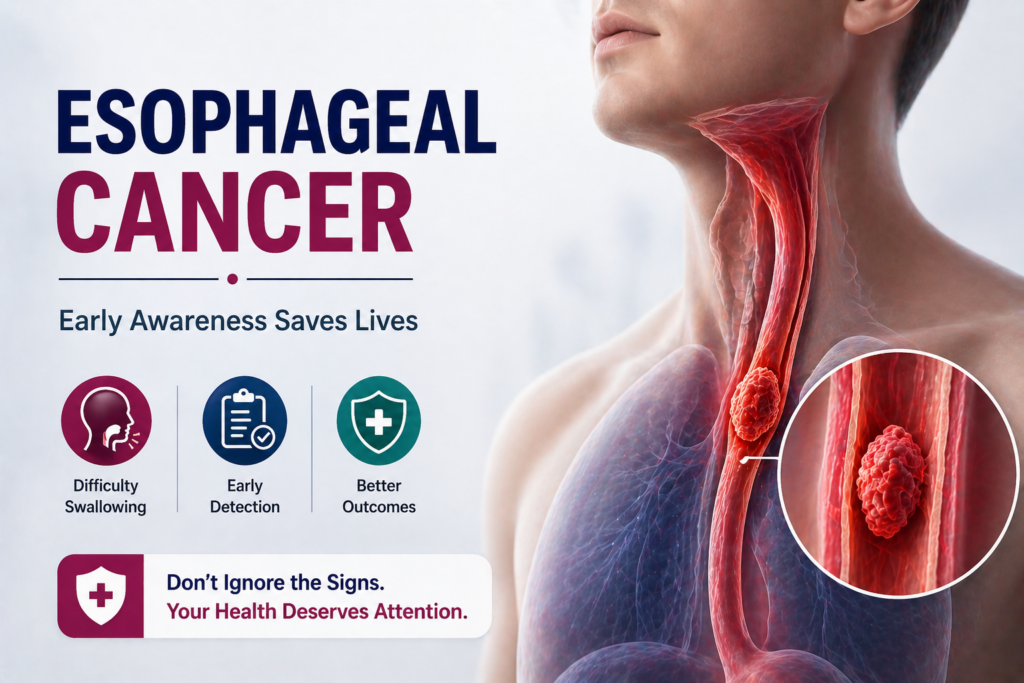
What is Esophageal Cancer?
The esophagus is a long muscular tube that carries food and liquids from the mouth to the stomach. Esophageal Cancer develops when abnormal cells begin to grow uncontrollably in the lining of this passage. In many cases, the condition may not show clear symptoms during the early stages, which makes it difficult to identify immediately. As the disease progresses, swallowing difficulties, chest discomfort, or unexplained weight loss may begin to appear. Because of its silent progression, early awareness and timely medical attention are extremely important for better health outcomes.
When Simple Swallowing Becomes a Concern
One of the earliest and most common esophageal cancer symptoms is difficulty swallowing (dysphagia). What may begin as mild discomfort can gradually progress to a feeling of food getting stuck in the throat. Along with this, individuals may experience unexplained weight loss, chest discomfort, or persistent throat irritation. These changes are often mistaken for common digestive issues, which can delay timely diagnosis.
Underlying Causes and Risk Factors
The development of esophageal cancer is often linked to long-term irritation of the food pipe. Conditions such as chronic acid reflux can damage the inner lining over time. Lifestyle factors like smoking, alcohol consumption, and poor dietary habits further increase the risk. Understanding these causes helps in taking preventive steps and maintaining better digestive health.
A Holistic View Through Ayurveda
From an Ayurvedic perspective, this condition is associated with an imbalance in Pitta dosha, which governs heat and digestion in the body. When digestive fire (Agni) becomes irregular and toxins (Ama) accumulate, it can affect the health of the digestive tract. Ayurveda focuses on restoring internal balance, soothing the digestive system, and supporting the body’s natural healing processes.
Conclusion
Esophageal cancer awareness is crucial because early symptoms can easily be overlooked. Paying attention to persistent swallowing difficulties and seeking timely medical advice can make a significant difference. A balanced approach that combines modern medical care with holistic support can help improve quality of life and support overall well-being.