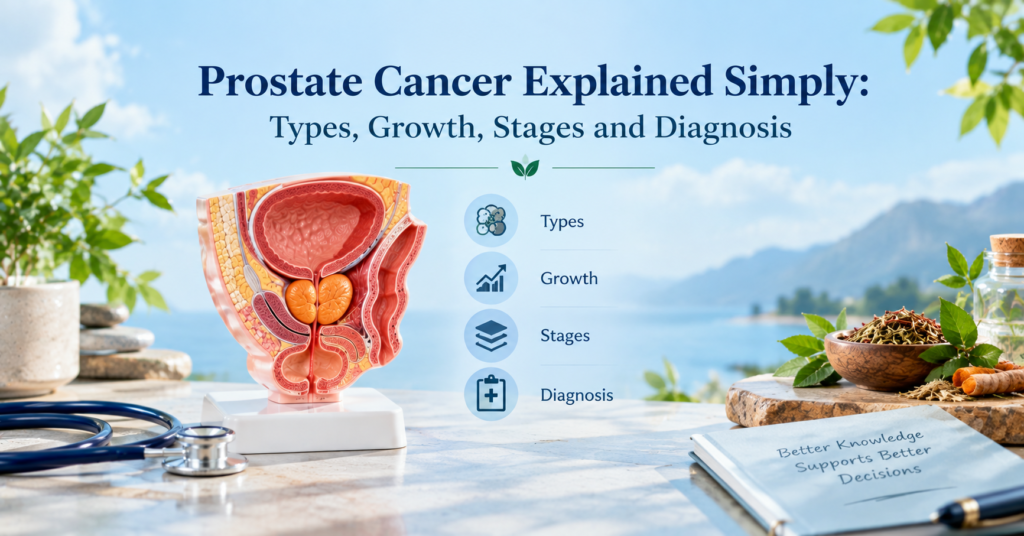
Prostate cancer does not have one single cause. It develops when changes occur in the DNA of prostate cells, causing some cells to grow and divide abnormally. These DNA changes can happen during a person’s lifetime or, in some cases, may be inherited from a parent. Researchers continue to study why these changes occur in some men and not others.
Knowing the factors that can increase prostate cancer risk can help men understand their personal health history and have informed conversations with a healthcare professional.
1. Increasing Age
Age is one of the strongest known risk factors for prostate cancer. The disease is uncommon in younger men, while the risk increases substantially as men grow older, particularly after 50.
Age itself does not cause prostate cancer directly. Rather, as cells age, there are more opportunities for genetic changes to accumulate over time.
2. Family History
A family history of prostate cancer can increase a man’s risk. Having a father, brother, or son who has had prostate cancer is particularly important when considering personal risk. The risk can be higher when several close relatives have been diagnosed or when they developed the disease at a younger age.
This is why knowing the cancer history on both sides of the family can be useful when discussing prostate health.
3. Inherited Gene Changes
Some men inherit gene changes that can increase their susceptibility to prostate cancer. Changes involving genes such as BRCA1, BRCA2, and other DNA-repair genes have been associated with increased risk. Lynch syndrome is another inherited condition associated with a higher risk of several cancers, including prostate cancer.
However, inherited genetic changes account for only a portion of prostate cancers. Most genetic changes linked to prostate cancer develop during a person’s lifetime rather than being inherited.
4. Ancestry and Ethnicity
Prostate cancer risk differs among racial and ethnic populations. For example, men of African ancestry have a higher incidence of prostate cancer than many other groups and may develop it at younger ages. Researchers believe that genetic, biological, healthcare, and social factors may all contribute to these differences.
Ancestry is therefore one factor that healthcare professionals may consider when assessing an individual’s overall risk.
5. Hormonal Factors
The prostate depends on male hormones, particularly androgens such as testosterone, for normal function. Because prostate cells respond to these hormones, researchers have studied the relationship between hormones and prostate cancer development. Hormonal pathways also play an important role in how prostate cancer behaves and is treated.
The relationship between hormones and cancer development is complex, so hormone levels alone should not be considered a direct cause.
6. Lifestyle and Other Possible Factors
Researchers have investigated body weight, physical activity, diet, smoking, alcohol consumption, and certain vitamins or minerals in relation to prostate cancer. However, the evidence is not equally strong for all of these factors, and some findings remain uncertain or inconsistent.
For this reason, it is important not to assume that a particular food, habit, or lifestyle choice directly causes prostate cancer.
BPH or Prostatitis: Do They Cause Prostate Cancer?
Benign prostatic hyperplasia (BPH) and prostatitis are prostate-related conditions, but they are not established causes of prostate cancer. BPH is a non-cancerous enlargement of the prostate, while prostatitis refers to inflammation of the prostate.
Having one of these conditions does not automatically mean that a man will develop prostate cancer.
Having a Risk Factor Does Not Mean You Will Develop Cancer
A risk factor increases the possibility of developing a disease, but it does not determine what will happen to an individual. Some men with several risk factors never develop prostate cancer, while others may develop it without having an obvious known risk factor.
This is why personal risk should be considered as a combination of age, family history, inherited factors, ancestry, and other relevant health information rather than based on one factor alone.
How Ayurveda Can Support Overall Well-Being
For men concerned about prostate health or undergoing cancer care, Ayurvedic supportive care can be considered as part of a personalized wellness approach alongside the existing medical care plan.
A qualified Ayurvedic physician may focus on individualized nutrition, daily routines, digestion, relaxation practices, sleep, and overall well-being. Men exploring Ayurvedic cancer treatment can discuss their medical history, reports, current medicines, and treatment plan with a qualified practitioner to develop appropriate supportive care.
Final Thoughts
Prostate cancer develops through complex changes within prostate cells, and there is no single explanation for why it occurs. Age, family history, inherited gene changes, and ancestry are among the most recognized risk factors. Other possible influences continue to be studied.
Understanding these risk factors can help men become more aware of their personal health history and discuss prostate health appropriately with a qualified healthcare professional.