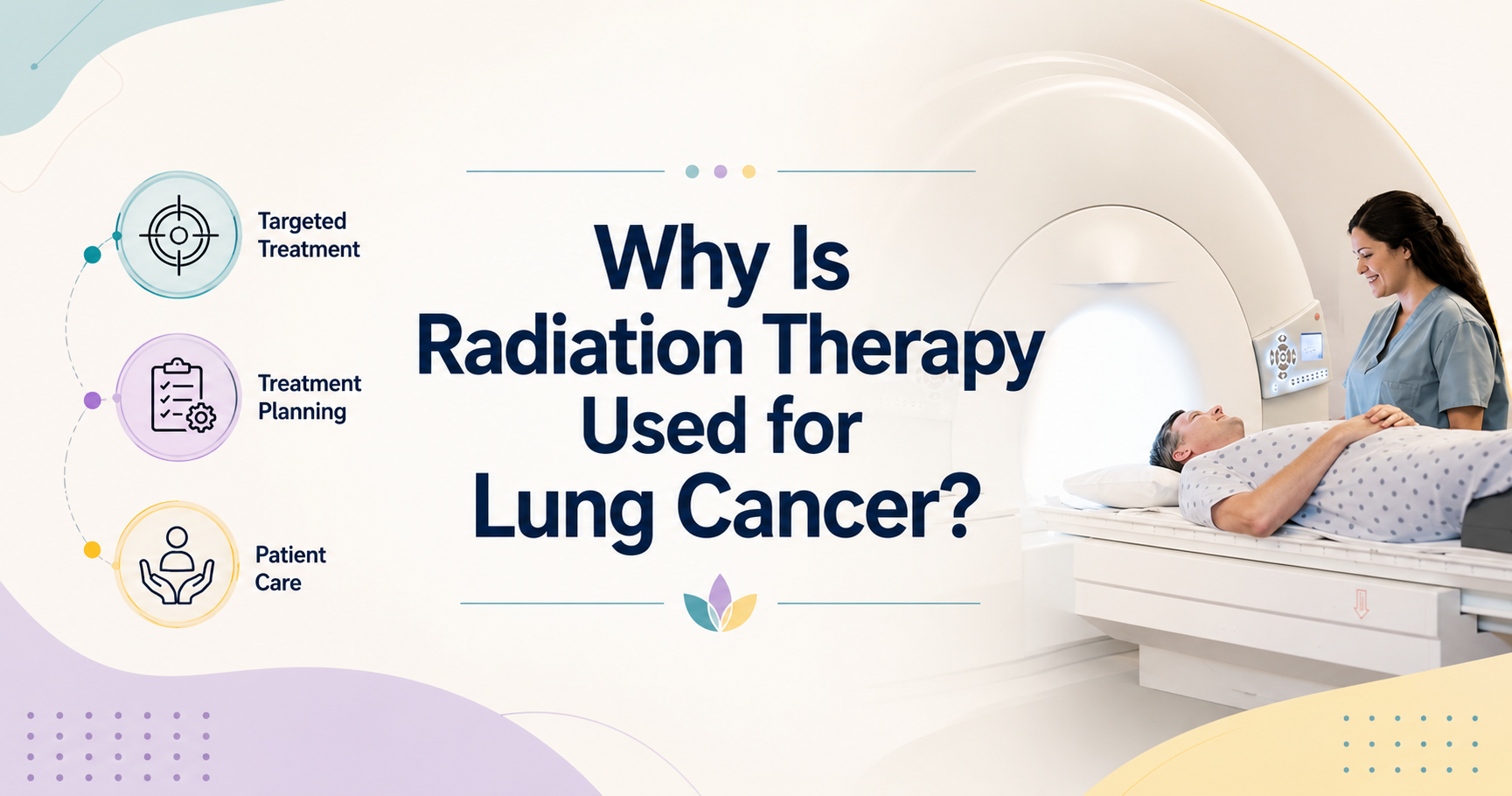
Radiation therapy is an important treatment option for some people with lung cancer. It uses carefully controlled, high-energy radiation to damage cancer cells and prevent them from continuing to grow and divide. Depending on the type and stage of lung cancer, radiation may be used alone or together with surgery, chemotherapy, immunotherapy, or other treatments.
Radiation is not suitable or necessary for every patient. The treatment plan depends on factors such as the type of lung cancer, its location, stage, overall health, and previous treatments.
How Does Radiation Therapy Work?
Radiation treatment directs energy toward a specific area containing cancer cells. The goal is to damage the DNA of those cells so they can no longer multiply effectively.
Modern radiation techniques allow doctors to plan treatment carefully so that the radiation is focused as precisely as possible on the intended area while limiting exposure to nearby healthy tissues.
When May Radiation Be Recommended?
Doctors may consider radiation therapy at different points during lung cancer care.
For some patients with an early-stage tumour who cannot undergo surgery because of other health concerns, highly focused radiation may be used as the main treatment.
Radiation can also be given after surgery in selected situations when doctors believe additional treatment may help reduce the chance of cancer returning in a particular area.
For locally advanced lung cancer, radiation may be combined with chemotherapy or other treatments to target cancer in the chest.
Radiation for Advanced Lung Cancer
When lung cancer has spread to other parts of the body, radiation may sometimes be used to control specific areas causing problems.
For example, treatment may help reduce symptoms caused by a tumour pressing on nearby structures. Depending on where the cancer has spread, radiation can sometimes be used to relieve pain or other cancer-related complications.
In this setting, the purpose may be symptom control and improving quality of life rather than eliminating all cancer.
Different Ways Radiation Can Be Delivered
Radiation therapy is not the same for every patient. External beam radiation is commonly delivered from a machine outside the body. The machine directs radiation toward the planned treatment area.
Some patients may receive highly precise forms of radiation that deliver concentrated doses to a tumour while attempting to minimize exposure to surrounding tissue.
The number and frequency of treatment sessions depend on the individual treatment plan.
What Happens Before Treatment?
Before radiation begins, the healthcare team performs detailed planning. Imaging scans help identify the exact location and size of the area that needs treatment.
The radiation oncology team then develops a treatment plan based on the tumour’s position and the patient’s overall condition.
Patients may be asked to remain in a particular position during treatment so the radiation can be delivered accurately.
What Can Patients Expect During a Session?
Radiation treatment itself is generally not painful. Patients usually lie still while the radiation machine delivers the planned treatment.
The actual radiation delivery may take only a short time, although appointments can include preparation and positioning.
Patients typically do not feel the radiation while it is being delivered. The healthcare team monitors the treatment process and provides instructions throughout the course.
Can Radiation Cause Side Effects?
Radiation can affect nearby healthy tissues, so some patients experience side effects. These vary depending on the treatment area, radiation dose, treatment duration, and individual health.
Possible effects may include tiredness, skin changes in the treated area, cough, or irritation involving the swallowing passage when that area receives radiation.
Not everyone experiences the same effects. Patients should tell their healthcare team about new or worsening symptoms so they can receive appropriate support.
Why Is Individualized Treatment Important?
There is no single radiation plan that works for every person with lung cancer. Doctors consider the cancer’s characteristics, location, stage, previous treatments, and the patient’s overall health before recommending radiation.
A multidisciplinary cancer team may work together to determine whether radiation should be used, when it should be given, and whether it should be combined with another treatment.
Conclusion
Radiation therapy can play several roles in lung cancer care. It may be used to treat certain tumours directly, reduce the risk of cancer returning in selected situations, work alongside other treatments, or relieve symptoms caused by advanced disease.
The decision to use radiation depends on the individual patient’s cancer and overall health. Understanding why radiation is recommended can help patients have more informed conversations with their oncology team and prepare for the treatment journey.