Understanding the Purpose of Radiation Therapy
When someone is diagnosed with breast cancer, the treatment plan often includes more than one approach. Depending on the stage of the disease and the individual’s condition, treatment may involve surgery, chemotherapy, hormone therapy, targeted therapy, radiation therapy, or a combination of these. Each treatment has a specific purpose, and together they aim to achieve the best possible outcome.
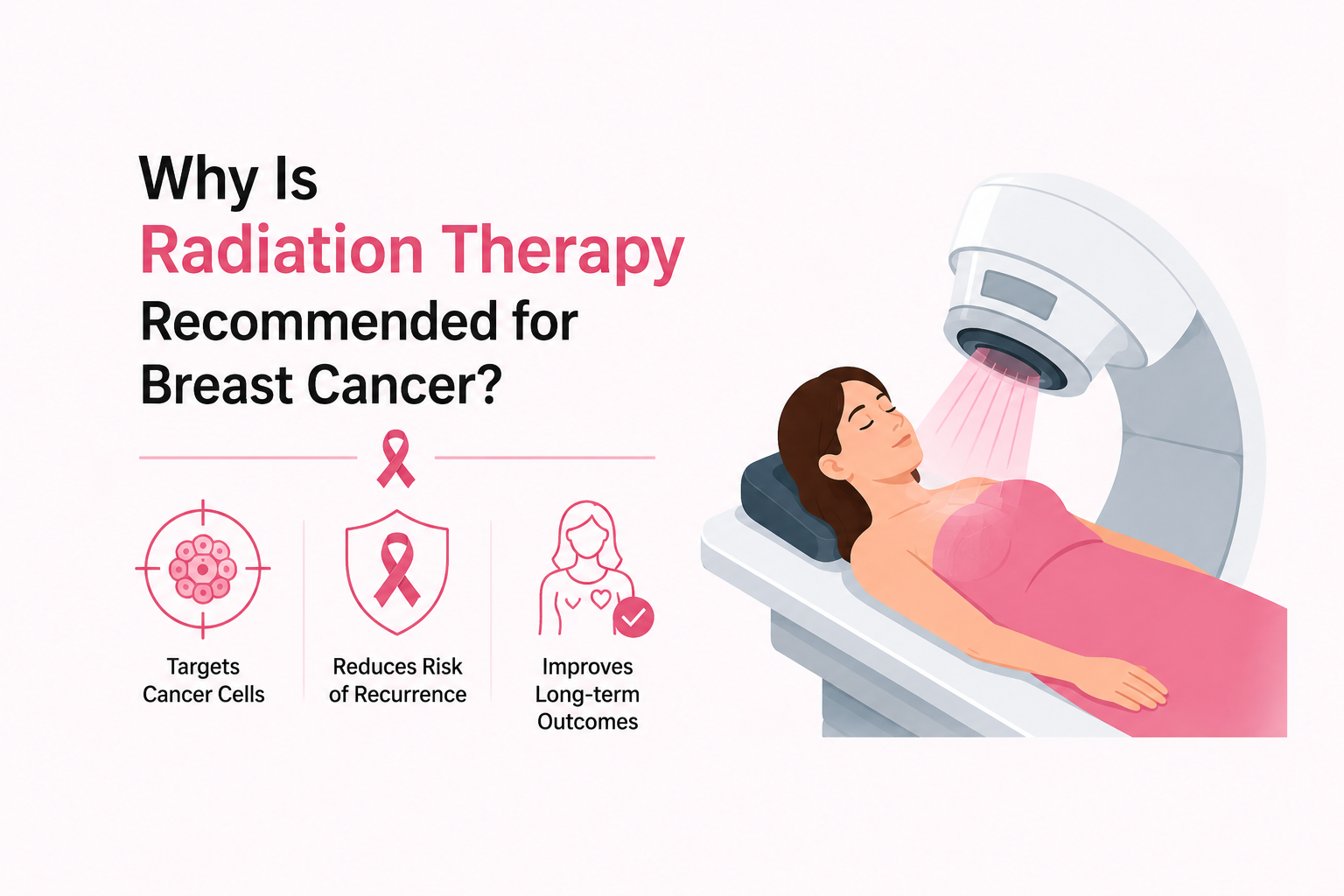
Radiation therapy is commonly recommended because it helps destroy cancer cells that may remain in the breast, chest wall, or nearby lymph nodes after surgery. Although these remaining cells may not be visible on scans or cause symptoms, treating them can help reduce the chance of the cancer returning in the same area.
What Is Radiation Therapy?
Radiation therapy is a local treatment that uses carefully targeted high-energy radiation to destroy cancer cells. Unlike chemotherapy, which travels throughout the body, radiation therapy focuses only on the area being treated.
The treatment is planned with great precision to deliver radiation to the affected area while minimizing exposure to surrounding healthy tissues. Modern radiation techniques are designed to improve treatment accuracy and reduce unwanted effects.
Why Doctors Recommend Radiation Therapy
The main goal of radiation therapy is to lower the risk of breast cancer returning after primary treatment.
Doctors may recommend radiation therapy for several reasons, including:
- After breast-conserving surgery (lumpectomy) to treat any remaining cancer cells in the breast.
- After a mastectomy when there is a higher risk of recurrence.
- If cancer has spread to nearby lymph nodes.
- When the original tumor was large or had certain high-risk features.
- To improve local control of the disease as part of a comprehensive treatment plan.
The decision is based on factors such as the stage of breast cancer, tumor size, lymph node involvement, surgical findings, age, and overall health.
When Is Radiation Therapy Usually Given?
Radiation therapy is most often started after surgery once the surgical area has healed. If chemotherapy is also part of the treatment plan, radiation therapy is usually given after chemotherapy has been completed. The exact timing varies for each individual and is determined by the treating oncology team.
Treatment is generally provided over several sessions, allowing healthy cells time to recover between treatments while continuing to target cancer cells effectively.
Who May Benefit from Radiation Therapy?
Not every person diagnosed with breast cancer will require radiation therapy. The recommendation depends on individual medical findings.
Radiation therapy may be advised for people who:
- Have undergone breast-conserving surgery.
- Have cancer involving nearby lymph nodes.
- Have larger breast tumors.
- Have certain pathological features that increase the risk of recurrence.
- Require additional local treatment based on their doctor’s assessment.
Your oncology team carefully reviews all test results before deciding whether radiation therapy is appropriate.
Does Radiation Therapy Remove Existing Tumors?
Radiation therapy is not usually performed to remove a breast tumor. Surgery is generally the primary treatment used to remove the cancer.
Instead, radiation therapy is used to destroy microscopic cancer cells that may remain after surgery. In some situations, it may also be used to relieve symptoms or help control cancer that has spread, depending on the patient’s condition and treatment goals.
Is Radiation Therapy Safe?
Radiation therapy has been used successfully in breast cancer treatment for many years. Before treatment begins, advanced imaging and computerized planning are used to calculate the exact area that requires treatment.
The healthcare team continuously monitors treatment to maximize effectiveness while protecting nearby healthy tissues as much as possible.
Like any medical treatment, radiation therapy can cause side effects, but not everyone experiences them in the same way. Common effects may include temporary skin irritation, mild swelling, tiredness, or discomfort in the treated area. These effects are often manageable and usually improve after treatment is completed.
Supporting Your Health During Radiation Therapy
Maintaining healthy daily habits can help support overall well-being during radiation treatment. Eating freshly prepared, balanced meals, staying well hydrated, getting adequate rest, wearing loose and comfortable clothing, and following your healthcare team’s skin care instructions can help you feel more comfortable throughout treatment.
Many individuals also include complementary wellness practices, such as Ayurveda, alongside their medical care. Ayurvedic approaches may focus on balanced nutrition, healthy routines, and overall wellness. However, these practices should always complement conventional cancer treatment and should never replace radiation therapy or other treatments recommended by your oncology team.
Conclusion
Radiation therapy is recommended for many breast cancer patients because it helps destroy cancer cells that may remain after surgery and reduces the risk of the disease returning in the treated area. The decision to include radiation therapy is based on each person’s diagnosis, treatment history, and overall health.
Understanding why radiation therapy is recommended can help patients feel more informed and confident about their treatment journey. Discussing your treatment plan with your oncology team ensures that you receive personalized care based on your individual needs.